AI Governance and Strategy for Small Businesses

AI FOR MSMEs
AI Governance & Strategy for Small Businesses
A practical guide to AI ethics, privacy, risks, regulations, strategy, readiness, implementation, budgeting, ROI, and responsible AI adoption for small businesses and MSMEs.
For a broader introduction to artificial intelligence and its role in small businesses, explore our complete guide to AI for MSMEs. It provides a comprehensive foundation for understanding AI before moving into governance, strategy, implementation, and responsible AI adoption.
Understanding AI Governance & Strategy
Adopting artificial intelligence is not only about choosing the right AI tools. Small businesses also need to understand how AI affects privacy, security, ethics, business decisions, employees, customers, and long-term strategy.
AI governance provides the principles and safeguards that help businesses use artificial intelligence responsibly, while AI strategy focuses on identifying where AI can create meaningful business value.
This AI Governance & Strategy hub brings together practical guides to help small business owners assess their readiness, manage AI risks, create an adoption strategy, implement AI effectively, measure results, and build a responsible approach to artificial intelligence.
Start Here: AI Ethics & Responsibility
AI Ethics Every Small Business Should Know
Understand the key AI ethics principles small businesses should consider when using artificial intelligence for customers, employees, marketing, operations, and decision-making.
AI Privacy and Data Security Guide
Learn how small businesses can protect customer, employee, financial, and confidential business information when using AI tools and services.
Read the privacy and security guide →
Explore common AI risks, including inaccurate outputs, privacy issues, security concerns, bias, overreliance on AI, vendor risks, and unexpected business costs.
AI Regulations Every Business Should Understand
Learn why AI regulations and compliance considerations matter for small businesses and what business owners should consider when adopting AI technologies.
Read the AI regulations guide →
AI Strategy & Business Readiness
How to Build an AI Strategy for Your Business
Learn how to create an AI strategy that connects artificial intelligence investments with real business goals, priorities, opportunities, and measurable outcomes.
Creating an AI Adoption Roadmap
Build a practical roadmap for moving from AI experimentation to structured adoption, implementation, measurement, and long-term improvement.
Is Your Business Ready for AI?
Assess your business's AI readiness by evaluating data, people, processes, technology, leadership, budget, and the problems you want AI to solve.
How Much Does AI Cost for Small Businesses?
Explore the potential costs of AI adoption, including software subscriptions, implementation, training, integrations, infrastructure, and ongoing maintenance.
AI Implementation & Measuring Success
Step-by-Step AI Implementation Guide
Follow a practical step-by-step process for selecting, testing, deploying, managing, and improving AI solutions in a small business.
Read the AI implementation guide →
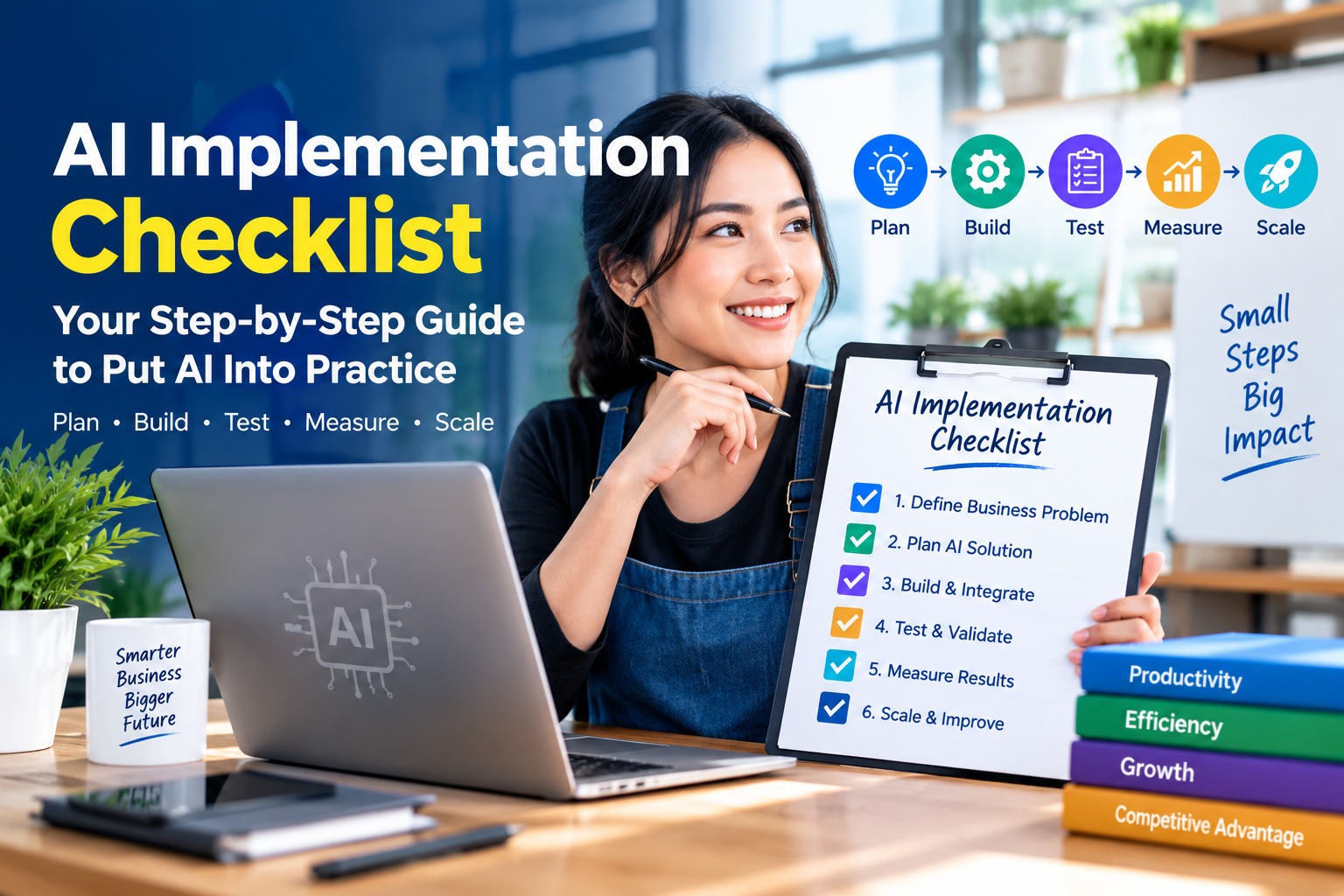
AI Implementation Checklist for Small Businesses
Use this practical AI implementation checklist to review business goals, readiness, data, privacy, security, AI tools, workflows, employees, testing, measurement, and responsible implementation before scaling AI.
Use the AI implementation checklist →
Measuring ROI from AI Investments
Learn how to measure the business impact of AI by tracking productivity, cost savings, revenue, efficiency, customer experience, and other meaningful performance indicators.
Learning From AI Successes & Failures
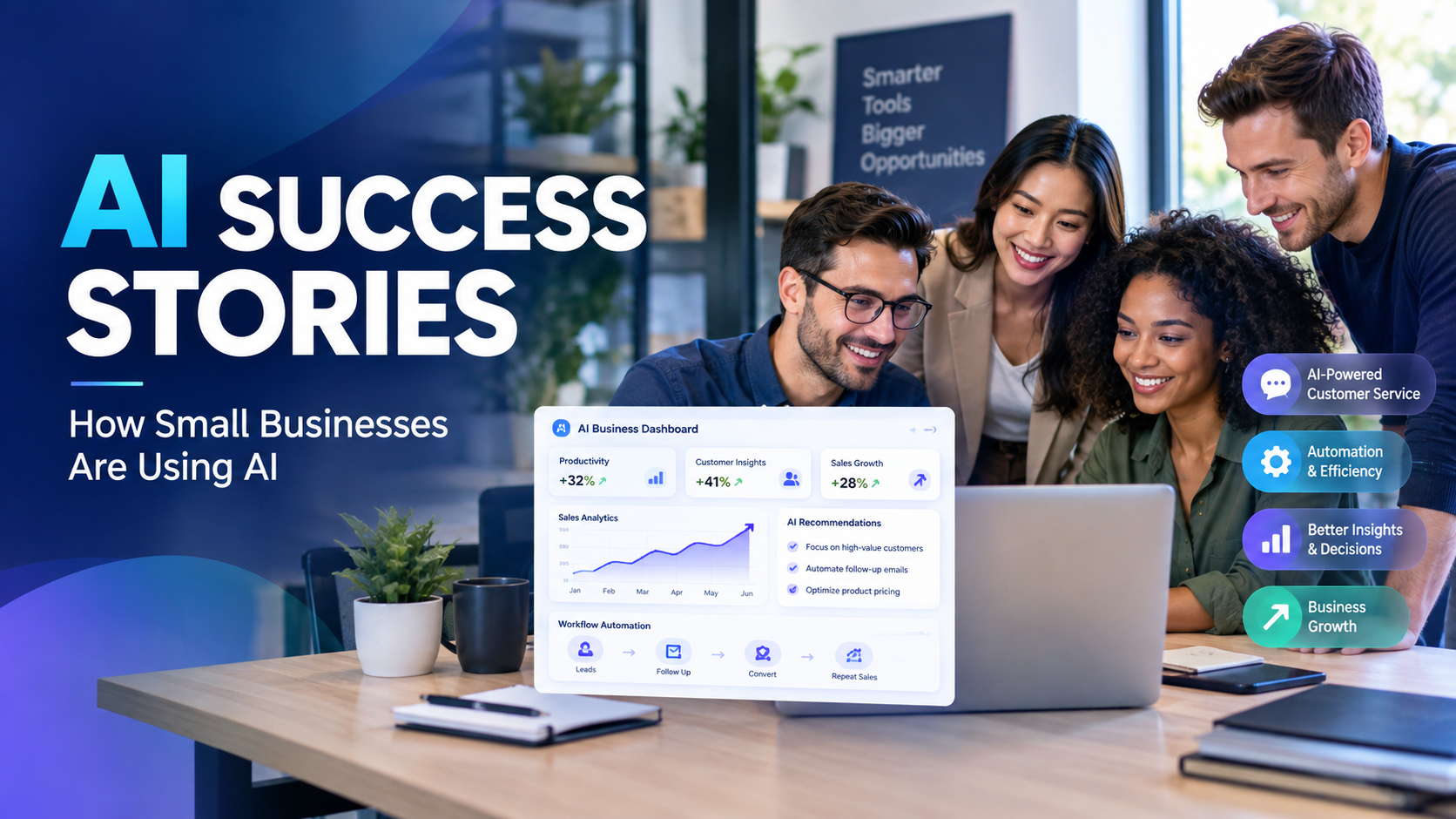
AI Success Stories from Small Businesses
Explore real-world examples of how small businesses can use artificial intelligence to improve productivity, customer experience, marketing, operations, and business growth.
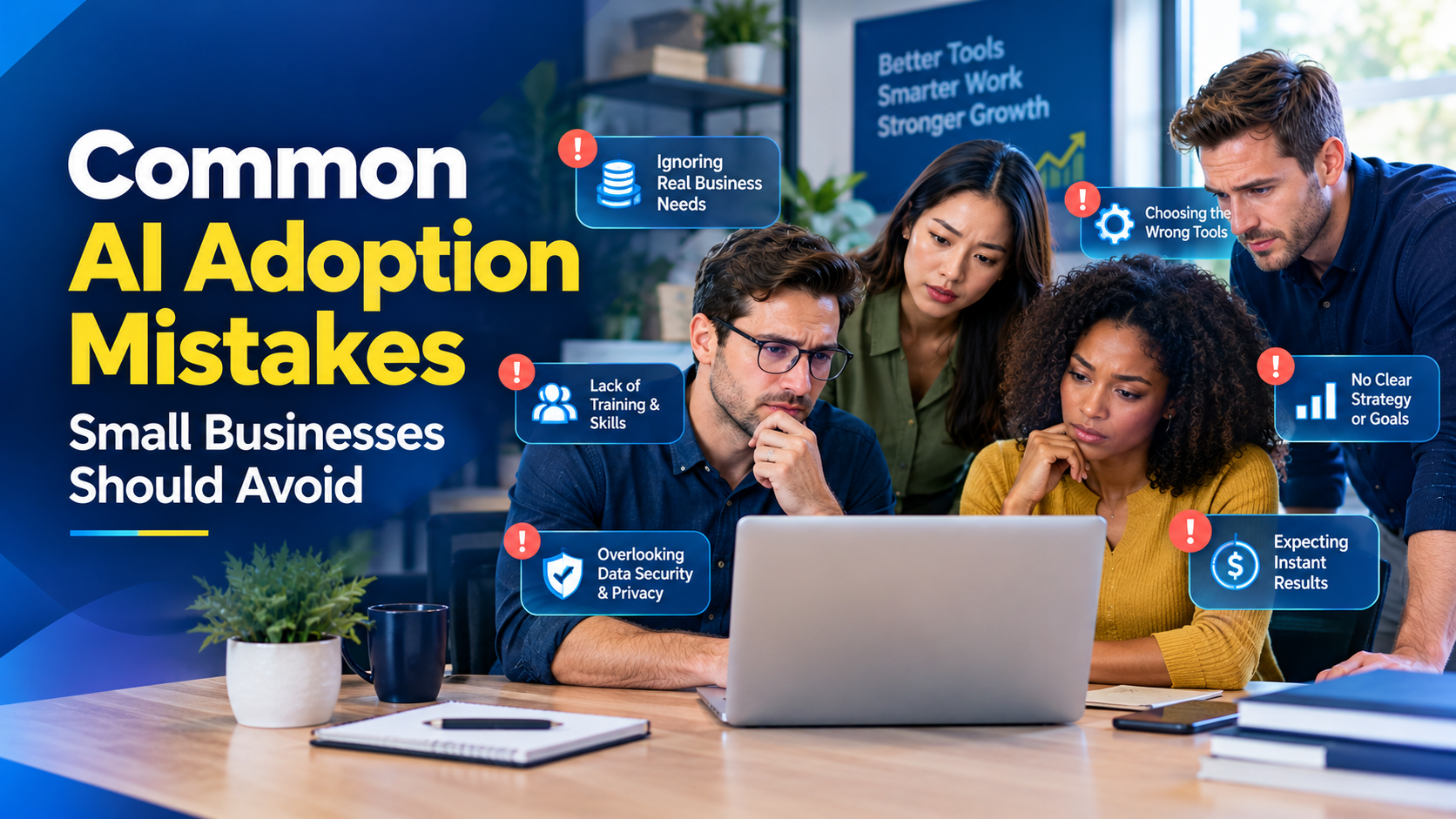
Common AI Mistakes Small Businesses Make
Learn from common AI adoption mistakes, including choosing tools without a clear goal, ignoring data risks, skipping employee training, and failing to measure results.
The AI Governance & Strategy Learning Path
1. Understand AI Responsibility — Learn about AI ethics, privacy, data security, risks, and regulatory considerations before deploying AI.
2. Assess AI Readiness — Determine whether your people, processes, data, technology, leadership, and budget are ready for AI adoption.
3. Build an AI Strategy — Identify business problems where AI can create meaningful value and establish clear strategic priorities.
4. Create an Adoption Roadmap — Turn your AI strategy into a practical sequence of pilots, implementations, and scalable initiatives.
5. Plan the Investment — Understand AI costs, budget requirements, expected benefits, and potential return on investment.
6. Implement AI — Select appropriate tools, prepare employees, manage data, deploy AI, and use the AI implementation checklist to verify that important implementation steps have been considered.
7. Measure Results — Track AI performance, productivity, cost savings, revenue impact, customer experience, and other meaningful business outcomes.
8. Learn and Improve — Study successful implementations, avoid common mistakes, review risks, and continuously improve your AI strategy.
How Small Businesses Should Think About AI Strategy
AI adoption should not begin with the question: "Which AI tool should I buy?"
A better starting point is: "Which business problem could AI help solve, and is our business ready to manage it responsibly?"
Business Goal → Business Problem → AI Opportunity → Readiness → Strategy → Right Tool → Responsible Implementation → Measure Results
This approach helps small businesses avoid technology-first decision-making and instead focus on measurable business value, responsible adoption, and sustainable AI investment.
Explore More AI for MSMEs
AI Fundamentals for Small Businesses — A practical guide to understanding artificial intelligence, its benefits, challenges, trends, and real-world applications for small businesses and MSMEs.
AI Software & Technology for Small Businesses — AI software, tools, and technology that help small businesses automate tasks, improve productivity, reduce costs, and grow efficiently.
AI Marketing — AI for content, campaigns, customer insights, and marketing automation.
AI Sales & Customer — AI for sales processes, customer service, personalization, and customer relationships.
AI Finance — AI applications for financial analysis, forecasting, bookkeeping, and business decisions.
AI Operations — AI for workflows, productivity, automation, and daily operations.
AI Tools — Practical AI tools that businesses can use to solve specific problems.
AI by Industry — Explore how AI applications differ across industries and business models.
AI Resources for Small Business Owners
Best AI Learning Resources for Small Business Owners
Discover useful AI learning resources, guides, frameworks, and educational materials to help small business owners better understand and adopt artificial intelligence.
Explore AI learning resources →
Build a Responsible AI Strategy Before You Scale
Artificial intelligence can create significant opportunities for small businesses, but successful adoption requires more than finding powerful AI tools.
Businesses need to understand the risks, protect their data, prepare their people, establish clear goals, manage implementation, and measure whether AI is actually creating meaningful value.
The strongest AI strategy is not necessarily the one that uses the most AI. It is the one that connects technology with business objectives while maintaining appropriate governance, oversight, and accountability.
Understand the risks, assess your readiness, build a clear strategy, implement responsibly, and measure what AI delivers.