From Bluesky To Reddit, Democrats Celebrate Charlie Kirk's Assassination; Trump Slams Radical Left - BERITAJA
 By: Albert Michael - Thursday, 11 September 2025 22:24:29 • 10 min read
.png)
.png)
USA - The evening of September 10, 2025, began like many other events on the calendar of American political life, with a crowded lecture hall at Utah Valley University filled with students, cameras, and young conservatives eager to hear from Turning Point USA founder Charlie Kirk. Known for his fiery speeches, sharp critiques of the Democratic Party, and his ability to galvanize Gen Z toward conservative causes, Kirk had become a fixture of campus activism across the United States. What unfolded that night, however, was not another campus debate or a clash of ideas—it was an act of political violence that left the conservative movement reeling. Kirk was assassinated while speaking on stage, sending shockwaves through the nation and sparking one of the most heated debates over political rhetoric, safety, and responsibility in modern American history. Witnesses described chaos erupting within seconds of the attack. Students screamed, faculty members rushed to shield those nearby, and security officers attempted to secure the scene. By the time the hall was cleared, it was too late. Charlie Kirk, just 31 years old, was pronounced dead at the scene. News of the killing spread rapidly across social media platforms, television networks, and international outlets, prompting an immediate outpouring of grief from supporters around the world. Conservative leaders, religious figures, and heads of state issued statements of condolence, with many emphasizing the unique role Kirk had played in shaping the voice of young conservatives in the United States. What emerged in the hours and days following the assassination was not only grief, but also a fierce political struggle over the meaning of Kirk’s death and what forces had contributed to the environment that made such an act possible.
As details of the event spread, Kirk’s own words resurfaced in the national conversation. In 2016, he had written on social media: “You can tell a lot about a person by how they react when someone dies.” The phrase was repeated across television broadcasts, in op-eds, and in candlelight vigils, as supporters noted the chilling relevance of those words in light of the polarized reactions his murder produced. Many across the political spectrum condemned the assassination unequivocally, framing it as an attack on democracy itself. But on certain corners of the internet and among highly partisan activists, the responses were starkly different. Some individuals expressed celebration, framing Kirk as a divisive figure whose removal from the political scene was to be welcomed. This polarization in reaction underscored not only the fragility of American political discourse but also the depth of hostility that had taken root in the country’s culture wars.
Among the most visible figures to weigh in was Elon Musk, who responded to a widely shared post noting that “over 16,000 posts” had emerged online celebrating Kirk’s assassination and even calling for further acts of violence. Musk’s reply was a single exclamation mark—“!”—a symbol that was interpreted in many different ways, but which underscored the surreal nature of a world in which an assassination could immediately become fodder for viral commentary. Another post that circulated widely described spending just 30 minutes on Reddit and Bluesky and concluding: “If you don’t believe in the devil, go check it out. Pure evil on the other side.” The juxtaposition of grief, rage, and digital mockery illustrated how quickly a tragedy could be absorbed into the machinery of online political warfare.
Kirk’s prominence made him a target of both admiration and animosity. As founder of TPUSA, he had built a reputation for cultivating a highly energized grassroots network of young conservatives. His rallies, campus events, and media appearances drew crowds that few other conservative activists could match. Opponents often criticized him as divisive, pointing to his unapologetic rhetoric against left-wing causes. Supporters, however, praised his ability to speak directly to young voters, encouraging them to embrace faith, family, and conservative values. His assassination was therefore not merely the killing of an individual but the symbolic elimination of a figure who embodied an entire movement’s aspirations.
Reactions from political figures soon followed, and they revealed a divided political climate. On Capitol Hill, Republicans accused Democrats of fostering a culture of hostility that encouraged violence against conservatives. Some pointed to previous rhetoric from Democratic leaders, who had at times referred to far-right activists as “fascists” or “Nazis,” arguing that such framing primed supporters to view figures like Kirk as legitimate targets of aggression. Democrats, for their part, rejected the accusation, with some insisting that right-wing rhetoric had itself created a toxic environment that fueled broader political instability. The clash over blame threatened to overshadow the central fact of the tragedy: a prominent political activist had been killed on American soil while engaging in peaceful speech.
Even within Congress, the divide manifested in startling ways. During a session the day after the assassination, Representative Lauren Boebert called for a moment of prayer for Kirk. Reports indicated that some Democratic members shouted in protest during the request, while Speaker Mike Johnson attempted to restore order with the gavel. The incident, quickly captured and shared online, was cited by conservatives as evidence of disrespect and insensitivity from their political opponents. For Republicans, the behavior reinforced their belief that Kirk’s death was being minimized by those who had long sought to silence him.
The media sphere also became a battleground. MSNBC came under fire when political analyst Matthew Dowd commented during live coverage that Kirk had been “one of the most divisive younger figures,” linking his rhetoric to a broader environment of hate speech. Dowd remarked, “I always go back to, hateful thoughts lead to hateful words, which then lead to hateful actions. And I think that is the environment we are in.” The backlash was swift. Within hours, MSNBC president Rebecca Kutler issued a public apology, calling the remarks “inappropriate, insensitive and unacceptable.” Dowd himself released a statement of apology, clarifying: “I in no way intended for my comments to blame Kirk for this horrendous attack. Let us all come together and condemn violence of any kind.” The episode highlighted the delicate balance between analyzing the roots of political violence and the risk of appearing to justify it.
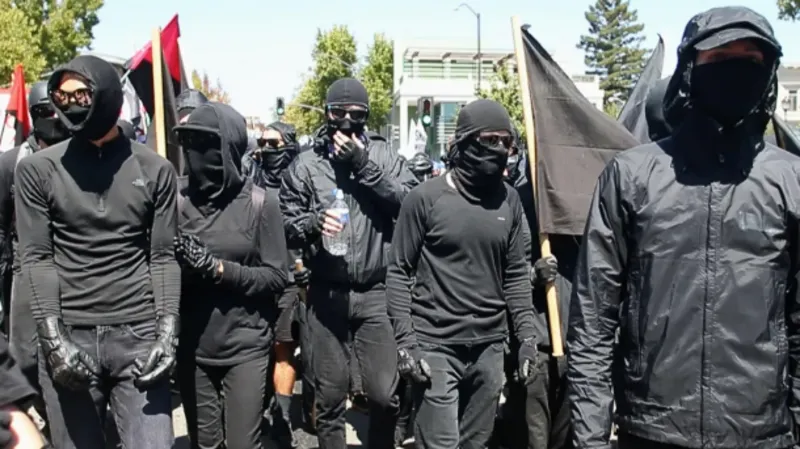
Meanwhile, conservatives began drawing connections between Kirk’s assassination and a broader pattern of political unrest. Some commentators pointed to incidents earlier in the year, including attacks on ICE facilities, protests targeting Tesla showrooms, and episodes of violence linked to fringe groups. The narrative emerging from conservative leaders suggested that years of heated rhetoric, amplified by left-wing activists and media outlets, had created conditions where violence was increasingly normalized. The framing positioned Kirk not only as a victim of one act but as the latest casualty in a sequence of politically charged hostilities.
The President Donald Trump addressed the nation from the Oval Office, calling the killing “a dark moment for America.” In his remarks, Trump described Kirk as “a martyr for truth” and vowed to crack down on what he called “radical left political violence.” He declared, “Radical left political violence has hurt too many innocent people and taken too many lives.” His speech marked one of the clearest signals yet that the administration intended to pursue aggressive measures against individuals and groups it deemed responsible for inciting unrest. While the specifics of such measures were not immediately outlined, the language suggested a potential expansion of federal investigations into activist networks, non-governmental organizations, and even social media influencers who played roles in shaping public discourse.
In parallel, a number of investigative threads surfaced, pointing to the international dimensions of the controversy. Months earlier, reports had indicated that Ukrainian entities, including the Center for Countering Disinformation, had compiled lists of foreign figures accused of spreading Russian propaganda. Charlie Kirk’s name had appeared on one such list, labeled a “Russian asset” by the group. Although no evidence directly linked these designations to the assassination, the revelation raised questions about how American activists were being monitored and labeled abroad, and whether such labels contributed to domestic hostility. Analysts noted that the presence of American citizens on international “enemies lists” highlighted the global nature of modern political information wars.
As the political fallout continued, attention turned to the question of Kirk’s legacy. Supporters emphasized that his greatest strength lay in his connection to young conservatives. Data circulated showing that Gen Z men had shifted significantly toward Republican preferences in recent years, with some attributing this movement in part to Kirk’s outreach efforts. Commentators argued that his ability to frame conservatism not merely as a set of policies but as a lifestyle—focused on faith, marriage, family, and community—resonated deeply with disaffected youth searching for purpose. One journalist recalled Kirk’s statement in an interview just a month prior: “My job every single day is actively trying to stop a revolution. This is where you have to try to point them towards ultimate purposes and towards getting back to the church, getting back to faith, getting married, having children. That is the type of conservatism that I represent, and I’m trying to paint a picture of virtue, of lifting people up, not just staying angry.” These words, now circulating in memorials and obituaries, underscored his mission as not only political but cultural and spiritual.
The assassination also reignited debates over security at political events. Universities, civic organizations, and activist groups faced scrutiny over how they handled invitations to controversial figures and the measures in place to ensure safety. Some argued that high-profile individuals like Kirk should have had federal protection given their prominence and the level of hostility they faced. Others cautioned against militarizing public speaking events, warning that excessive security could stifle the open exchange of ideas. Yet the undeniable fact remained: a lack of adequate safeguards had allowed a lethal act of political violence to unfold in front of hundreds of witnesses.
As investigators worked to piece together the motivations of the attacker, broader societal questions lingered. How had political rhetoric reached such a fever pitch that assassination was considered by some as a form of justice? What responsibility did leaders bear for framing opponents as existential threats? And what role did digital platforms play in amplifying hatred, mockery, and even celebrations of violence in real time? These questions dominated panel discussions, congressional hearings, and editorials for weeks after the killing, reflecting a national reckoning with the fragile boundaries of democratic discourse.
In the months that followed, the legacy of Charlie Kirk began to take shape in two competing narratives. To his supporters, he was remembered as a tireless advocate for youth engagement, faith, and conservative values, a man whose energy and message could not be silenced even in death. Memorial services and rallies held in his honor became venues not only for mourning but also for renewing commitment to his cause. To his critics, however, Kirk remained a controversial figure whose rhetoric had polarized communities. Yet even among detractors, there was acknowledgment that his assassination represented a dangerous escalation of political conflict in America.
The long-term impact of his death remains to be seen. What is certain is that September 10, 2025, marked a turning point in American politics. It exposed the vulnerability of public figures to targeted violence, highlighted the volatility of online reactions, and reignited debates over responsibility, security, and rhetoric in the public square. Whether the tragedy becomes a catalyst for de-escalation or yet another flashpoint in the nation’s deepening divisions will depend on the choices made by leaders, activists, and citizens alike. For now, the words Kirk once wrote echo with haunting resonance: “You can tell a lot about a person by how they react when someone dies.” The nation’s reaction to his death may, in the end, reveal more about the state of American democracy than any single speech or campaign ever could.