France In Flames As The 'Block Everything' Protest Movement Sweeps The Country - BERITAJA
 By: Albert Michael - Thursday, 11 September 2025 21:16:45 • 9 min read

FRANCE - On Monday, President Emmanuel Macron’s government faced a dramatic collapse when it failed to survive a decisive no-confidence vote in the French National Assembly. The result was overwhelming: Prime Minister François Bayrou was removed in a 364–194 vote, marking a significant defeat for the centrist administration. The central issue revolved around Bayrou’s proposal to cut government spending to address France’s mounting debt crisis, a plan regarded by supporters as fiscally responsible but considered deeply unpopular among large portions of the French public.
This development has thrown France into a period of deep political instability. Macron, who has already cycled through multiple prime ministers within a short span of time, quickly moved to appoint Sébastien Lecornu, the departing defense minister, as the new head of government. Lecornu is a seasoned political figure, having served in every Macron-led administration since 2017, but he now faces an extraordinary set of challenges: to stabilize a divided parliament, pass a budget before the end of the year, and contain a rapidly escalating protest movement that has brought unrest across the nation.
The Fall of François Bayrou
François Bayrou, who took office as prime minister in December, had hoped to introduce policies aimed at reducing France’s large budget deficit and slowing the growth of national debt. France has been grappling with rising borrowing costs and the pressures of financing its extensive social programs. Bayrou argued that fiscal tightening was unavoidable to ensure long-term economic stability. However, his emphasis on spending cuts quickly alienated both the left and right wings of parliament, as well as many voters who feared cuts to essential services.
The vote of no-confidence was not close. A coalition of opposition parties, ranging from the far left to the populist right, united in rejecting Bayrou’s approach. The message was clear: the austerity measures were politically untenable in the current climate of public dissatisfaction. Bayrou’s short tenure ended abruptly, leaving Macron scrambling to rebuild his government once again.
The Appointment of Sébastien Lecornu
In response to Bayrou’s removal, Macron turned to one of his most trusted allies, Sébastien Lecornu. As the departing defense minister and one of the few politicians to have served continuously in government since 2017, Lecornu brings experience and loyalty. His appointment marks the fourth time in a single year that Macron has been forced to replace the prime minister, a sign of the government’s fragility.
Lecornu faces immediate and daunting responsibilities. Most pressing is the passage of a national budget by the year’s end, a task complicated by the lack of a clear parliamentary majority. Additionally, he must navigate widespread anger over proposed austerity measures. His ability to balance fiscal discipline with political realities will determine whether the government can regain stability or face further collapse.
The Debt Crisis Behind the Political Turmoil
At the heart of France’s political upheaval lies a growing debt crisis. France’s public debt has surged in recent years, fueled by pandemic-related spending, rising energy costs, and long-standing commitments to social welfare programs. Analysts warn that without corrective measures, the country risks breaching sustainable debt levels within the European Union framework.
Bayrou’s proposal to reduce spending was rooted in economic pragmatism. Yet, austerity in France carries a heavy political price. French citizens have a long history of mobilizing against perceived attacks on public services, pensions, and labor protections. For many, the prospect of spending cuts evoked memories of past austerity measures that sparked widespread unrest. The resistance was swift and fierce, setting the stage for the political showdown that ultimately cost Bayrou his position.
A History of Snap Elections and Political Miscalculations
Macron’s current troubles are not isolated. Last year, he called a snap election in an effort to expand his slim parliamentary majority. Instead, the gamble backfired. The election empowered populist and far-left groups, leading to a fragmented parliament where Macron’s centrist bloc struggled to govern effectively. Since then, his administration has been caught between competing demands, unable to secure lasting consensus.
The failed gamble has left Macron vulnerable on multiple fronts. His opponents accuse him of being out of touch with ordinary citizens, while his allies express frustration at the lack of political cohesion. The cycle of no-confidence votes and cabinet reshuffles has further weakened his credibility. Many political observers now speculate that Macron may have little choice but to call yet another snap election, despite the risk of deepening the crisis.
The Rise of the “Block Everything” Movement
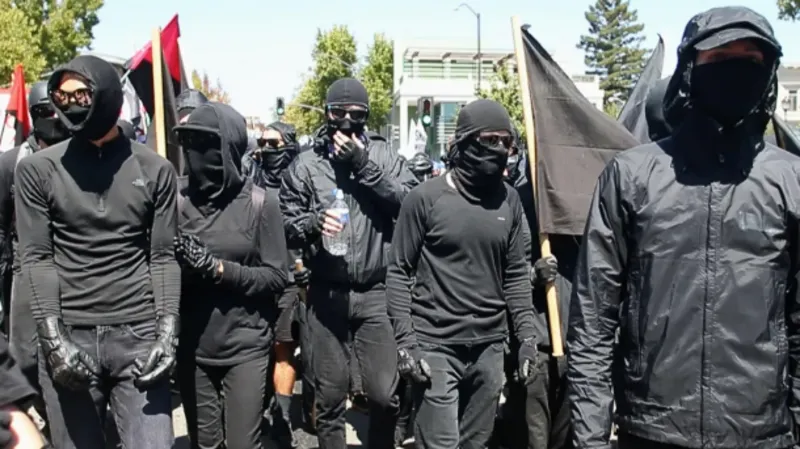
Adding to the government’s woes is the emergence of a powerful protest movement known as “Block Everything.” Initially born in online far-right circles over the summer, the movement has since expanded to include left-wing, antifascist, anarchist groups, and major labor unions. What began as scattered online calls to resist government policy has evolved into a nationwide campaign of civil disruption.
On Wednesday, protesters set fires, blocked highways, and shut down gas stations across France. Authorities deployed an extraordinary 80,000 police officers to contain the unrest. Despite these efforts, demonstrations spread to major cities, including Paris, where barricades were erected at entry points to the capital. Outside Gare du Nord, one of Paris’s busiest train stations, large crowds gathered, refusing to disperse even after police fired tear gas.
The scale of the protests suggests that France is entering a new phase of political unrest. Unlike traditional labor strikes or student demonstrations, the “Block Everything” movement represents a broad coalition of disaffected groups united by opposition to austerity and disillusionment with the political establishment. The result is a volatile mix that threatens to overwhelm government authority.
Protests in the Streets
Scenes of unrest unfolded across France. In Paris, groups of demonstrators clashed with police near key transport hubs. Students in eastern Paris blocked entry to a high school, sparking confrontations with law enforcement. Across the country, transportation networks were disrupted as unions joined the strike, halting train services and blocking roads.
The chants of protesters echoed a deep sense of alienation: “We are here, even if Macron doesn’t want us, we are here.” The words capture the determination of citizens who feel ignored by their leaders. For many participants, the protests are about more than budget cuts; they represent a broader rejection of political elites and the perception that government policies serve the interests of a few at the expense of the many.
Opposition Reactions
The political fallout from the no-confidence vote has been intense. Jean-Luc Mélenchon, leader of the far-left France Unbowed party, declared that only Macron’s resignation could restore trust in the political system. He accused the president of showing contempt for parliament and the electorate. For Mélenchon and his allies, the collapse of Bayrou’s government was not enough; they want Macron himself to step aside.
On the populist right, National Rally leader Jordan Bardella took a more cautious stance. While critical of Macron’s decision to appoint Lecornu, Bardella announced that his party would not immediately join the far left in attempting to oust the new prime minister. Nevertheless, his skepticism was clear. Bardella questioned how a longtime supporter of Macron could break from policies that have defined the administration for eight years. His remarks underscored doubts about whether Lecornu represents genuine change or simply continuity.
The Role of Trade Unions
France’s powerful labor unions have historically played a decisive role in shaping political outcomes. Their participation in the current wave of protests signals the seriousness of the situation. By mobilizing transport workers, refinery employees, and public-sector staff, unions have magnified the disruption caused by demonstrations. The decision to align with broader protest movements reflects both opposition to austerity and a strategic calculation that political instability could strengthen their negotiating position.
The involvement of unions ensures that protests will have tangible economic effects, from fuel shortages to transport paralysis. This dynamic creates additional pressure on the government to reconsider its policies. However, it also raises the stakes, as prolonged disruption risks alienating the broader public and escalating tensions further.
A Nation at a Crossroads
France now finds itself at a crossroads. The collapse of Macron’s government, the appointment of a new prime minister, and the eruption of nationwide protests highlight the fragility of the country’s political system. Stability, once a hallmark of the Fifth Republic, appears increasingly elusive. The challenges facing Macron and Lecornu are formidable: how to govern without a parliamentary majority, how to restore public trust, and how to address structural economic problems without provoking mass unrest.
Some analysts believe that another snap election is inevitable. Both the left and the right see opportunities to increase their representation in parliament. Yet the likely outcome—another hung parliament—suggests that elections alone may not resolve the crisis. Instead, France could be entering a prolonged period of political fragmentation and social unrest.
The Broader European Context
The crisis in France has implications beyond its borders. As one of the European Union’s largest economies, France’s instability raises concerns about the bloc’s economic and political cohesion. Rising debt levels, resistance to austerity, and growing populist movements are challenges not unique to France but shared by several EU countries. How France navigates this crisis may influence debates in other member states grappling with similar pressures.
For European leaders, Macron’s difficulties serve as a cautionary tale about the limits of fiscal reform in the face of public resistance. Efforts to impose austerity without broad social consensus risk fueling political polarization and empowering extremist movements. The outcome in France may therefore shape broader EU policy discussions about balancing fiscal responsibility with social stability.
Last Thoughts
The collapse of Emmanuel Macron’s government following the no-confidence vote marks one of the most dramatic political crises in recent French history. With François Bayrou removed from office, Sébastien Lecornu faces the daunting task of stabilizing a fractured political landscape while confronting widespread public anger. The “Block Everything” movement, fueled by both left and right, underscores the depth of dissatisfaction with the political establishment.
Whether Macron can weather this storm remains uncertain. The possibility of new elections looms large, but such a step may only prolong the cycle of instability. For now, France is a nation in turmoil—its government weakened, its streets filled with protesters, and its future direction deeply uncertain.